
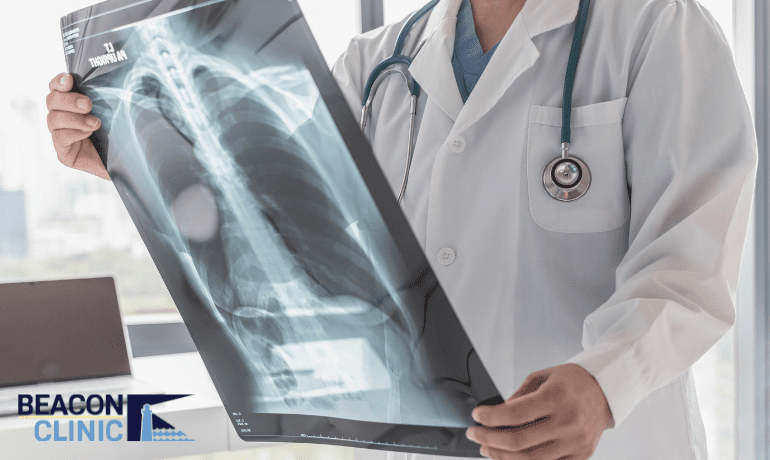
Bone cancer is relatively rare, comprising less than 1% of all cancers diagnosed each year in the United States. But for those who are part of that small percentage, receiving the diagnosis can be devastating.
July is Sarcoma and Bone Cancer Awareness Month. Cancer care is one of our specialties at Beacon Clinic in Coeur d’Alene, Idaho. We provide cutting-edge care and support services for cancer patients and are committed to raising awareness for patients suffering from all types of cancer. As we focus on bone cancer this month, we are sharing information about how to recognize it and developments in treatment that can aid patients in defeating it.
Types of Bone Cancer
Bone cancer can begin in the bones (primary bone cancer) or spread from another cancer in the body, such as the breast, prostate, or lungs (metastatic bone cancer). Metastatic bone cancer is more common. As with all cancers, early recognition and treatment significantly improve outcomes. Bone cancer results from the emergence of abnormal bone cells that begin to grow uncontrollably. There are several types:
- Osteosarcoma: This cancer often develops in teens and young adults; it usually starts in the long bones of the arms or legs.
- Ewing sarcoma: This type of bone cancer typically affects children and young adults; it is usually found in the pelvis, chest wall, or legs.
- Chondrosarcoma: This type of bone cancer is found more commonly in adults over 40; it develops in cartilage cells, usually in the pelvis or shoulders.
Early Symptoms: What to Watch For
Bone cancer symptoms can be easy to dismiss at first. Pain or swelling in a limb often accompanies temporary and more easily remediated conditions like sports injuries or growing pains. However, when these symptoms persist or worsen and do not respond to conventional treatments like pain medicine, rest, or ice, they should be evaluated. Common signs of bone cancer can include:
- Persistent bone pain, often worse at night or during activity
- A lump or swelling near a bone or joint
- Fractures of brittle or weakened bones that can occur from even minimal impacts
- Constant fatigue that isn’t relieved by rest
- Unintended weight loss
If you experience any or all of these symptoms for more than a few weeks, especially without an identifiable cause, it’s worth getting checked. In particular, children and teens who seem to have growing pains that cannot be relieved with any therapies should be evaluated.
Diagnosing Bone Cancer
Bone cancers can be positively identified, and an accurate diagnosis typically involves a combination of:
- Physical exam
- X-rays or MRI scans
- Bone biopsy to confirm the presence of cancer and identify the type
Your primary care doctor will work with radiologists, pathologists, and oncologists to confirm the diagnosis. It is at this point that many patients come to Beacon Clinic, where we can provide support services, assistance in developing a treatment plan, and, in some cases, on-site treatment.
Advances in Treatment
Like many other cancer therapies, bone cancer treatments have come a long way over the past few decades. Today’s cancer treatments are more precise, less invasive, and increasingly more effective, and new medical technologies for cancer are constantly being researched and tested. The following treatments may be commonly recommended for patients with bone cancer, depending on the type and stage of the cancer and the patient’s overall physical condition.
1. Surgery
Surgery remains a cornerstone of treatment. In many cases, limb-sparing procedures can remove the cancer without amputation. Surgeons can also reconstruct bones using grafts or implants to preserve mobility and function.
2. Chemotherapy
Often used before or after surgery, chemotherapy can shrink tumors or kill remaining cancer cells. It’s especially effective for osteosarcoma and Ewing sarcoma.
3. Radiation Therapy
Targeted radiation can help control tumors, especially when surgery isn’t possible. Advances in radiation technology allow doctors to focus treatment precisely, minimizing damage to healthy tissue.
4. Targeted Therapy & Immunotherapy
Newer drugs have been developed and continue to be developed that can target specific cancer cell mutations or help the immune system attack the cancer. These options are still evolving but show great promise, particularly for patients with advanced or resistant forms of bone cancer.
Living with Bone Cancer
At Beacon Clinic, we treat the whole person, not just the disease. Cancer impacts your physical, mental, and financial well-being. Our team specializes in providing personalized care and services, including access to physical therapy, pain management, and support services throughout your treatment and recovery. We also collaborate with regional cancer centers to ensure patients have access to emerging therapies and clinical trials.
If you or someone close to you—including children and teens—is experiencing unexplained bone pain, swelling, or fatigue that doesn’t improve, consider talking to a doctor to determine whether bone cancer may be the cause. Early detection provides you with more treatment options and better odds of recovery.
Receiving a cancer diagnosis is never easy, but you’re not alone. If you are diagnosed with any type of bone cancer, contact Beacon Clinic and schedule a consultation. We’ll guide you through the next steps with clarity, care, and the latest medical innovations, helping you understand what your options are and enabling you to develop a treatment plan that suits your preferences. We’ll be with you through every step of your cancer journey.
***
True patient-centered care means aligning specialists, services, and support in one coordinated effort—and that’s exactly what Beacon Clinic is doing with our new Urology service. For the first time in our area, all Board-Certified experts in urologic cancers are practicing together in the same location, including urologists, medical oncologists, and radiation oncologists. Patients facing prostate, kidney, bladder, or testicular cancer will benefit from an integrated approach that prioritizes collaboration and streamlines care. Call us at (208) 755-2804 or stop by 3815 N. Schreiber Way, Suite 101 in Coeur d’Alene to learn more.
